Your enquiry list is currently empty!

Your enquiry is our drive
Your enquiry is our drive

Despite our comprehensive wiki, you haven’t found the information you’re looking for? Then don’t hesitate to contact us directly.
Our team will be happy to help you personally – whether it’s specific applications, custom-made products or missing content. Together we will find the right solution.
Author:
Last modified:
The ZIMM Builder is often equated with classic CAD product configurators. However, this classification falls short. While CAD configurators map geometries and provide CAD data, the ZIMM Builder addresses a different, upstream challenge: the technically reliable design of complete lifting systems. The renaming is therefore not a marketing decision, but the logical consequence of a changed scope of functionality.
The former CAD product configurator had a clearly defined role:
Technical responsibility for the overall design largely remained with the user. Critical questions regarding combinability or technical admissibility often had to be clarified downstream – outside the tool.
CAD models show what something looks like, but not whether an overall system is technically permissible. In complex applications, problems rarely arise from incorrect geometries, but from incorrect assumptions within the system logic. This is exactly where classic CAD product configurators reach their limits.
In complex lifting systems, the real challenge does not lie in the representation of individual components, but in making a reliable decision about the overall system. Dependencies between sizes, loads, drives and accessories influence each other. An isolated consideration of individual components is not sufficient.
Incorrect configurations generally do not arise in the CAD model, but where technical dependencies are incompletely taken into account. If these relationships are only checked at a later stage, follow-up questions, correction loops and delays in the project process occur.
The renaming is the logical consequence of a significantly expanded scope of functionality. The ZIMM Builder no longer merely represents products, but actively supports technical decision-making at system level. Instead of combining individual parts, complete, technically valid systems are built.
No. The renaming is not a marketing measure, but a factually correct description of what the tool actually does: the systematic construction of technically secured solutions.
The ZIMM Builder follows a system-oriented approach. Technical rules, dependencies and exclusion criteria are stored within the system and are automatically taken into account during configuration. As a result, not only a CAD model is created, but a technically secured system solution.
System-supported decision logic is the core of the ZIMM Builder. It ensures that:
As a result, part of the technical responsibility is shifted from the user to the system.
| Aspect | ZIMM Builder | Classic CAD product configurators |
| Fundamental principle | System-supported decision logic for complete lifting systems | Representation of geometry and individual components |
| Technical responsibility | Supported by the system during configuration | Primarily lies with the user |
| Result | Technically secured system solution | CAD model |
| Decision-making basis | Shared technical decision-making basis | Different assumptions depending on role |
| Clarification of critical issues | Directly during configuration | Often downstream |
| Impact on the project | Fewer incorrect configurations, shorter project phases | Follow-up questions and correction loops |
The central added value lies in the shared technical decision-making basis. Sales, engineering and the customer work on the same foundation from the very beginning. Decisions are made where they are needed – in the early concept and quotation phase. For users in mechanical and plant engineering, using the ZIMM Builder means:
Incorrect configurations do not occur in the first place, as technical plausibility is already ensured during configuration.

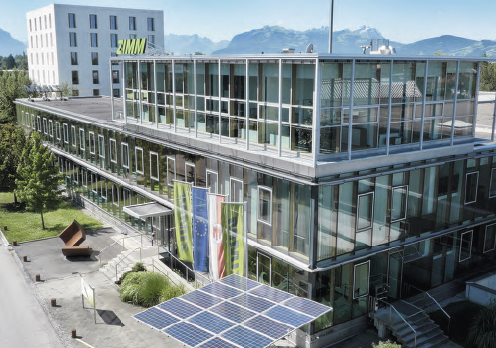
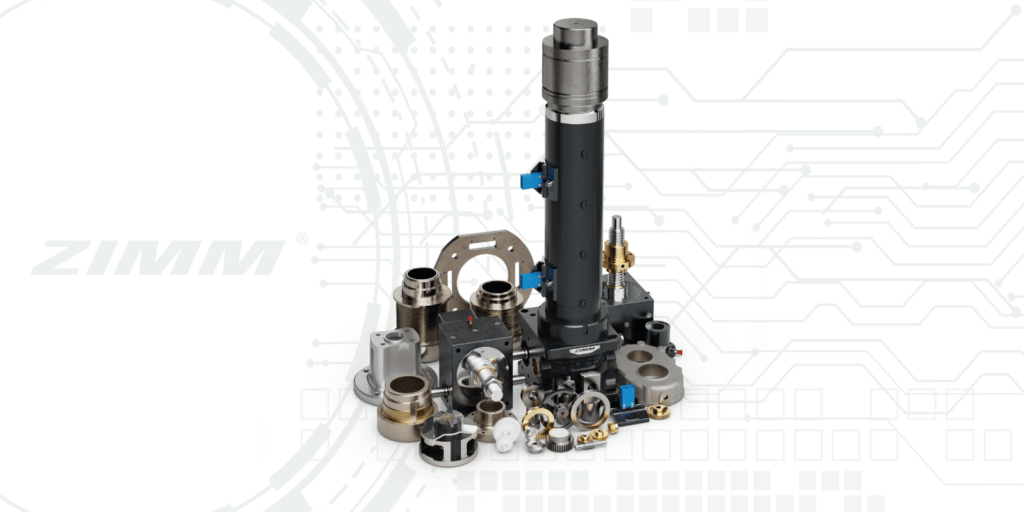
Our expertise ranges from the development and manufacture of industrial gearboxes with matching parts to casting, series production and precision machining. We not only offer robust gearboxes, but also customized drive elements, manufactured exactly according to your drawings and specifications.
As Europe’s leading manufacturer of screw jacks, we rely on state-of-the-art machinery and extensive measuring and testing facilities. This enables us to manufacture almost all products ourselves and deliver top quality at all times.
Regardless of the application or industry – our solutions are perfectly tailored to your needs. Make your inquiry today and boost your production processes with our flexible and customizable solutions.
Please contact our representative using the form. We will get back to you promptly with the appropriate answer.

You need to load content from reCAPTCHA to submit the form. Please note that doing so will share data with third-party providers.
More Information